About this brochure
This brochure explains how schools and other education settings can use lockdown and communication tools to put their procedures into practice. It covers starting a lockdown, refusing access through FireBird doors in cloud mode, alerting staff and showing a live roll call. It also describes drills, visitor sign-in and reports. A demo school example follows a lockdown from the first alert to the final record.
The brochure is for schools, colleges, nurseries and trusts, including the people responsible for their premises and the staff who manage their buildings. It outlines the four procedures discussed in Martyn’s Law: evacuation, invacuation, lockdown and communication. The system helps with lockdown and communication; the duty-holder remains responsible for all four procedures. The brochure also explains which doors are covered, how teachers account for pupils without their own door access, and how exits and fire release remain in place.
What’s inside
The text of each page, written out so it can be read and searched.
Page 1
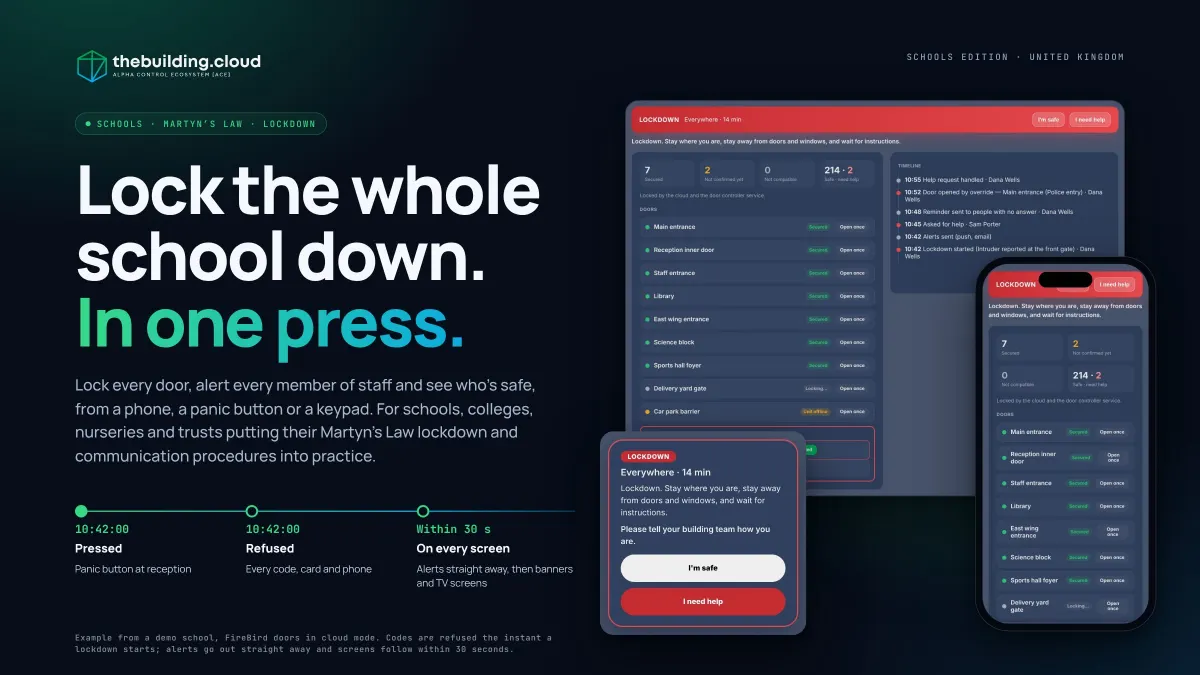
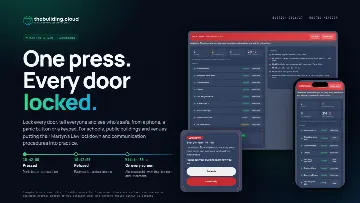
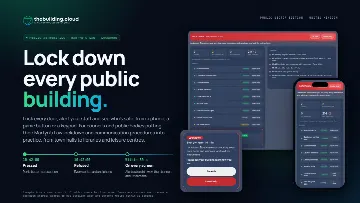
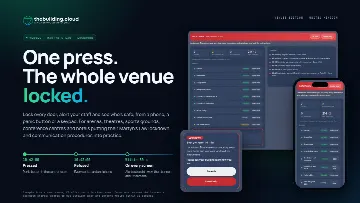
Lock the whole school down. In one press.
The brochure introduces lockdown tools for schools, colleges, nurseries and trusts putting their procedures into practice. In a demo school using FireBird doors in cloud mode, codes are refused as soon as lockdown starts, alerts go out straight away and screens follow within 30 seconds.
Page 2
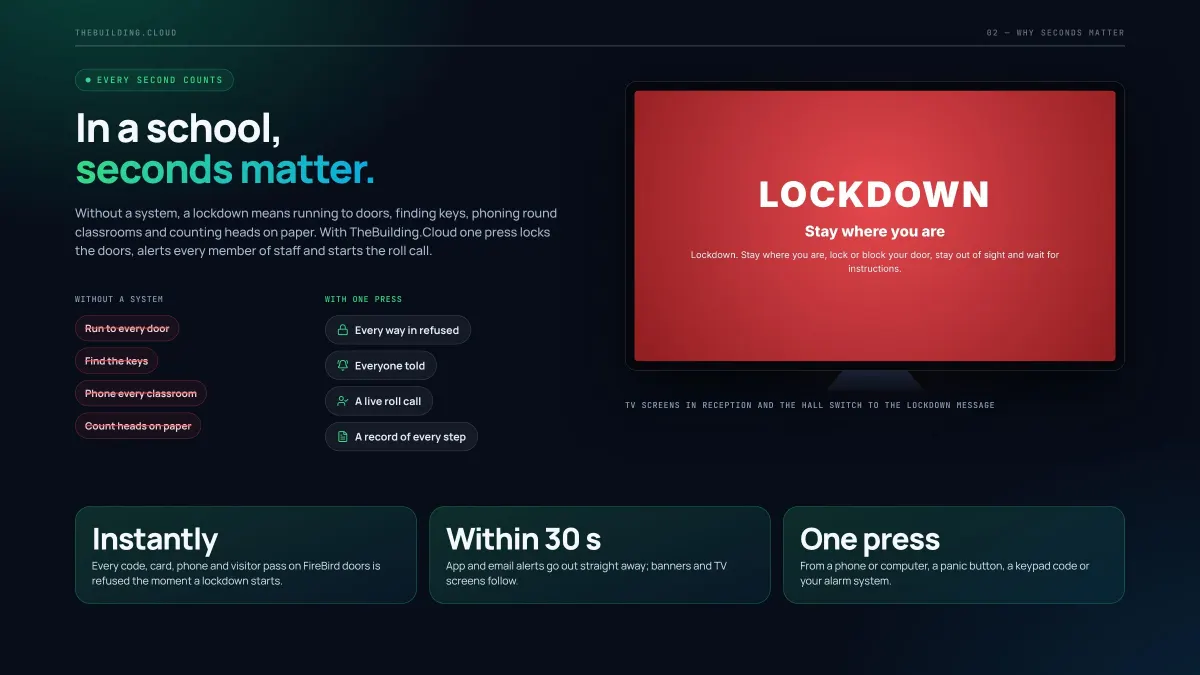
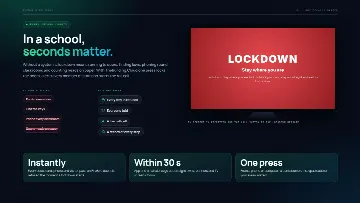
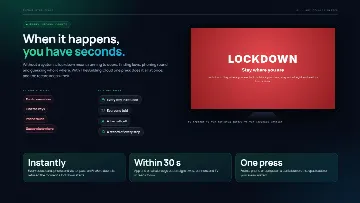
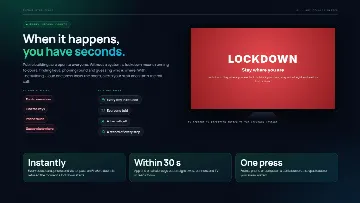
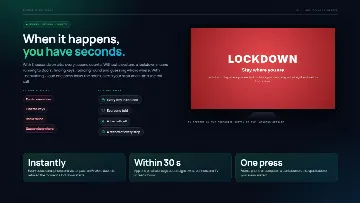
In a school, seconds matter.
One press starts the lockdown, alerts staff and begins a live roll call. It can be started from a phone or computer, a panic button, a keypad code or an alarm system.
Page 3
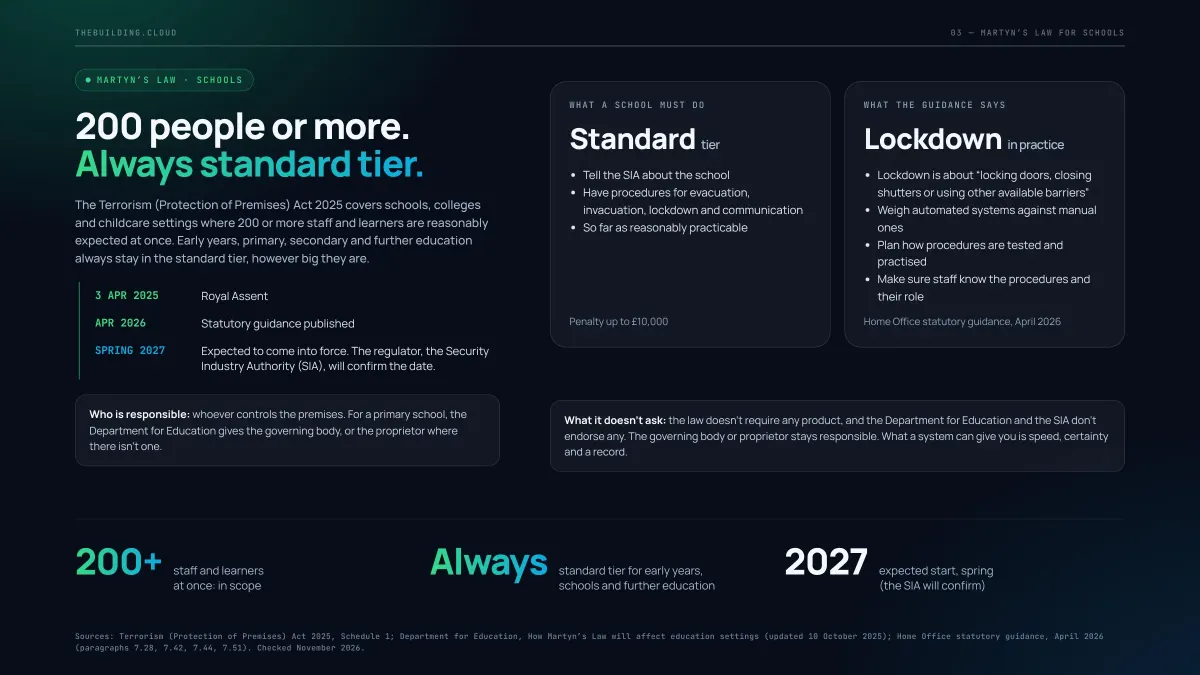
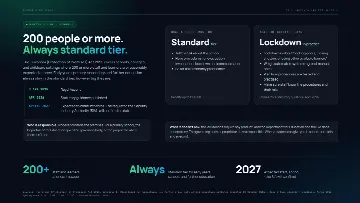
200 people or more. Always standard tier.
The brochure outlines how Martyn’s Law applies to education and childcare settings where 200 or more staff and learners are reasonably expected at once. It says early years, schools and further education remain in the standard tier, and that the governing body or proprietor remains responsible for the procedures.
Page 4
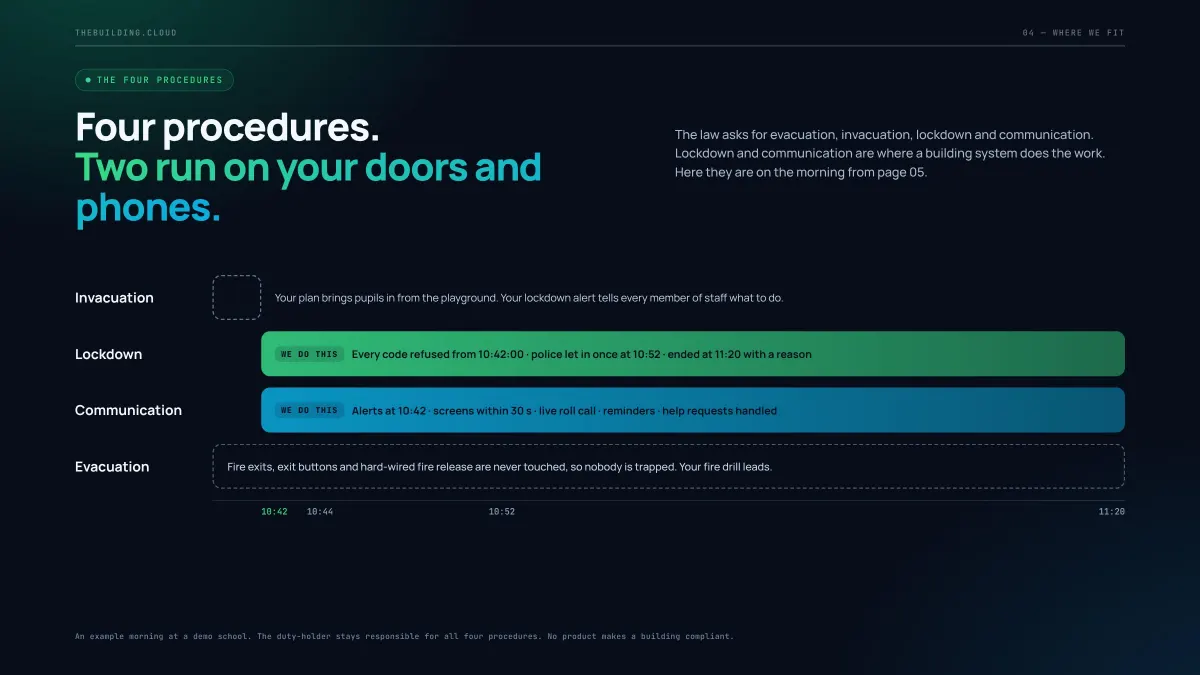
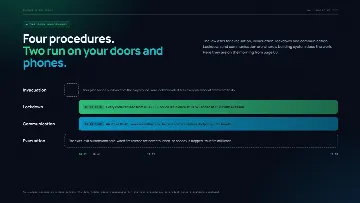
Four procedures. Two run on your doors and phones.
The brochure describes evacuation, invacuation, lockdown and communication, using a demo school morning to show lockdown and communication in practice. Exit buttons, fire exits and hard-wired fire release remain in place, while the duty-holder stays responsible for all four procedures.
Page 5
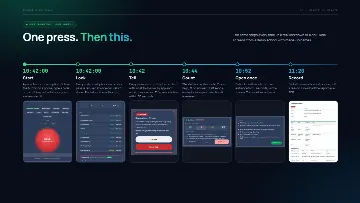
One press. Then this.
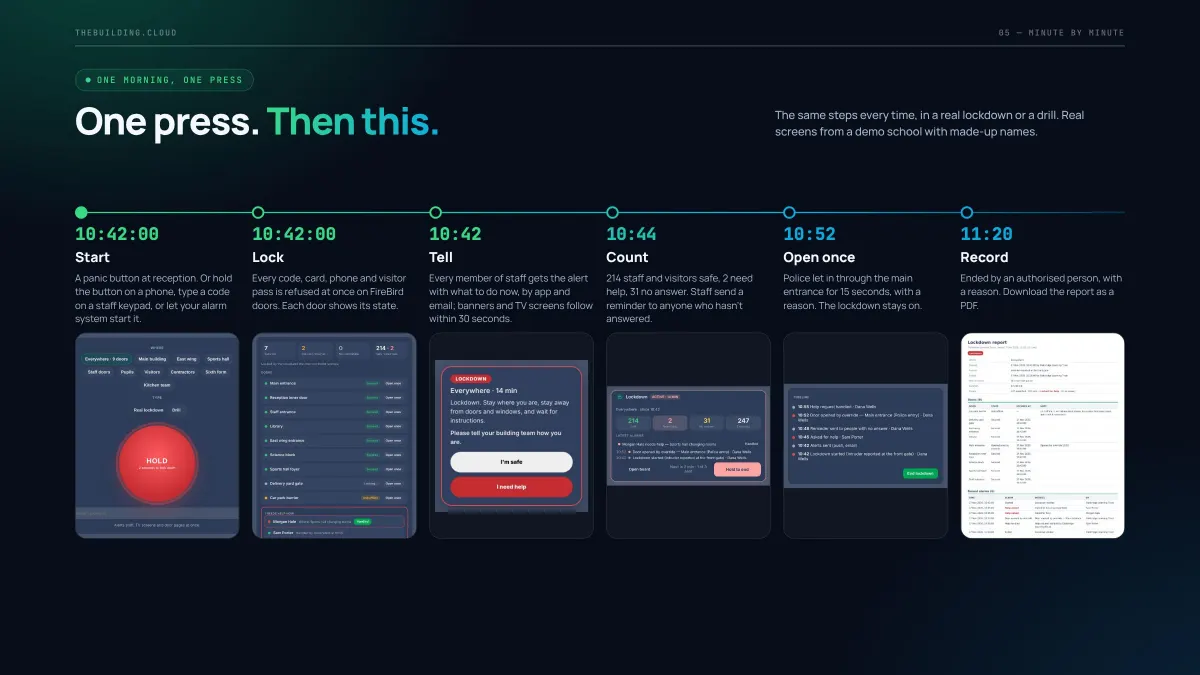
A demo school example follows a lockdown from a reception panic button through door access being refused, staff alerts and a roll call. It also shows a door opened once for police, followed by an authorised end and a PDF report.
Page 6
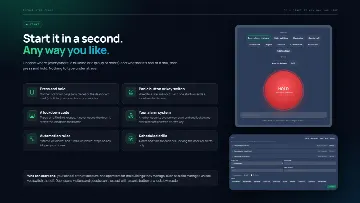
Start it in a second. Any way you like.
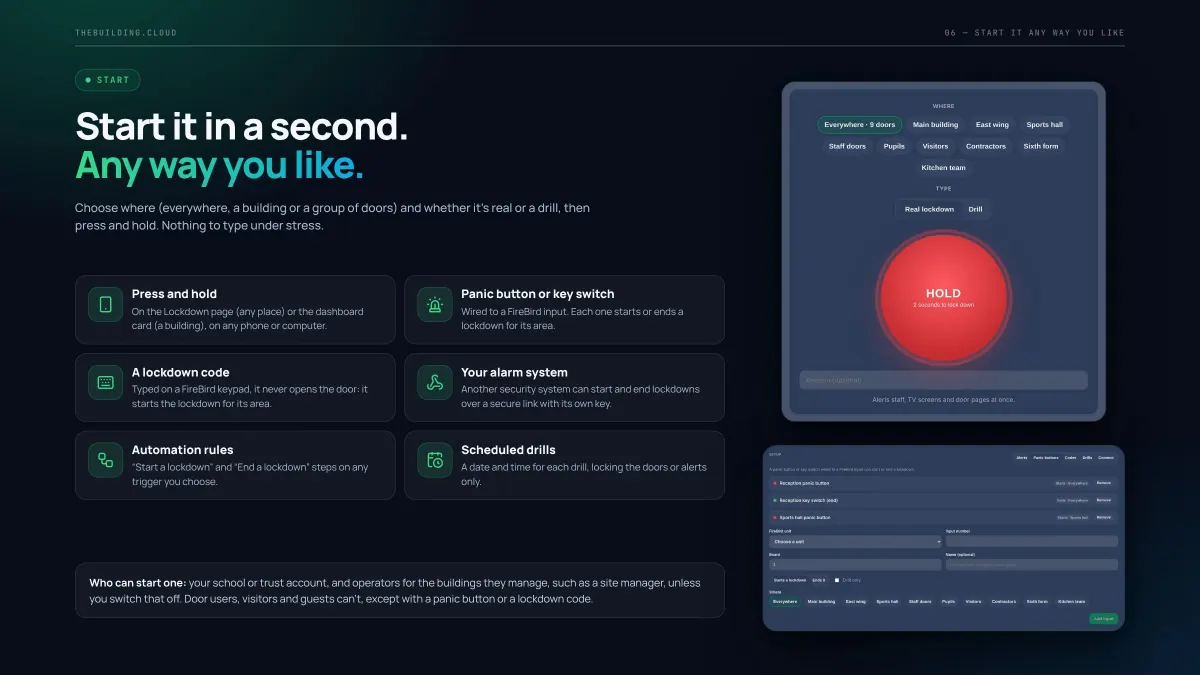
A lockdown can cover everywhere, a building or a group of doors, and can be real or a drill. Start options include a phone or computer, a wired panic button or key switch, a FireBird keypad code, an alarm system, automation rules and scheduled drills.
Page 7
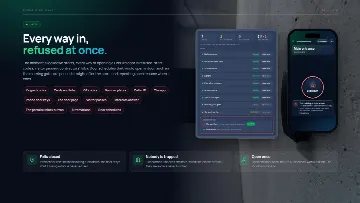
Every way in, refused at once.
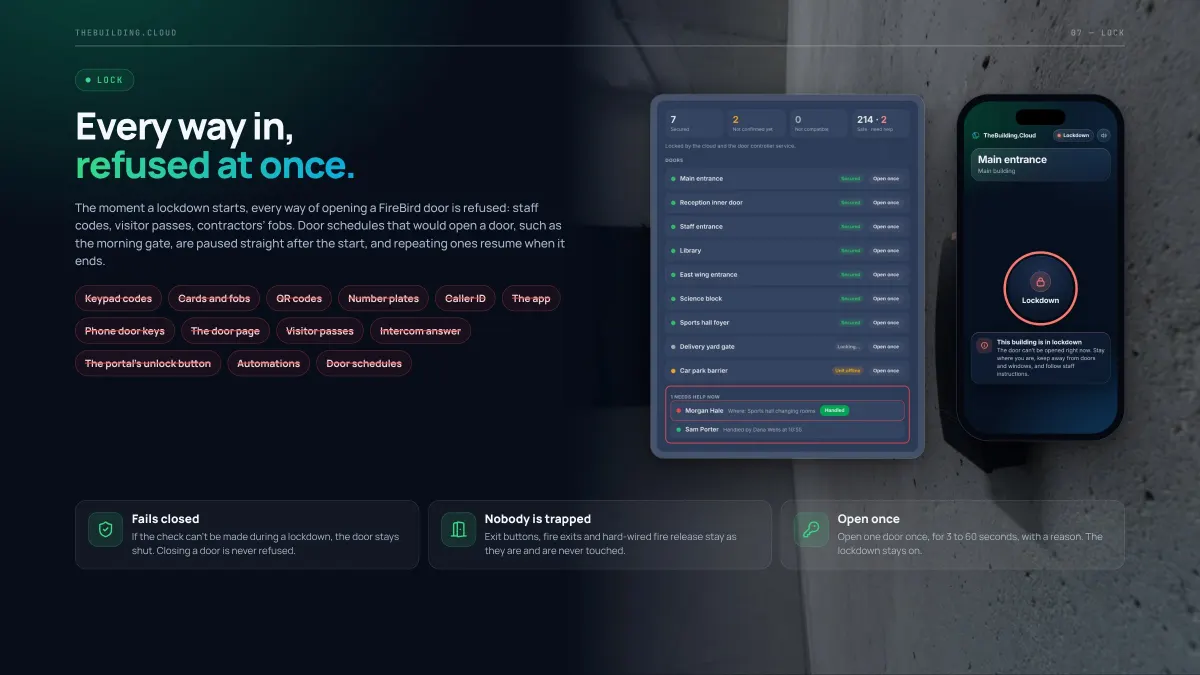
During lockdown, ways of opening a FireBird door are refused and door schedules that would open it are paused. Exit buttons, fire exits and hard-wired fire release are not changed; an authorised user can open one door once for 3 to 60 seconds with a reason.
Page 8
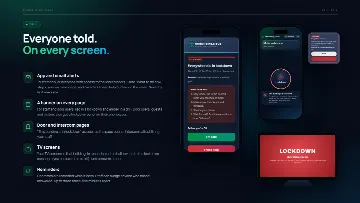
Everyone told. On every screen.
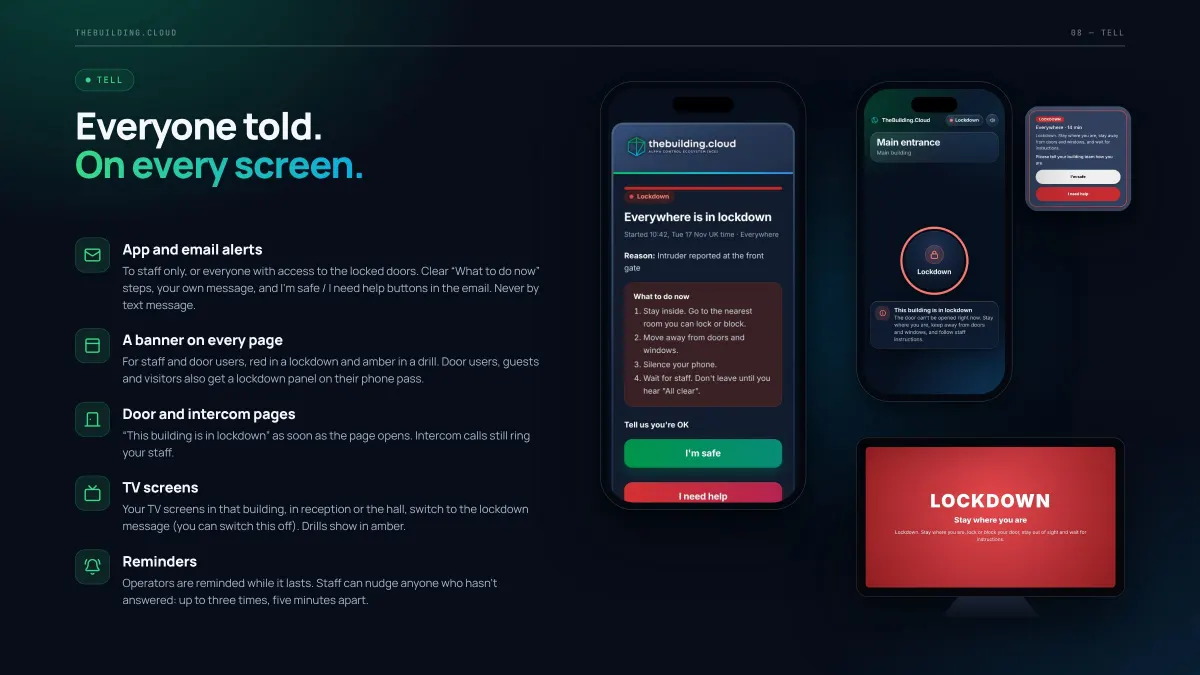
Alerts go by app and email, with banners, phone pass panels and optional TV screen messages. Staff can remind people who have not answered, and intercom calls still ring staff.
Page 9
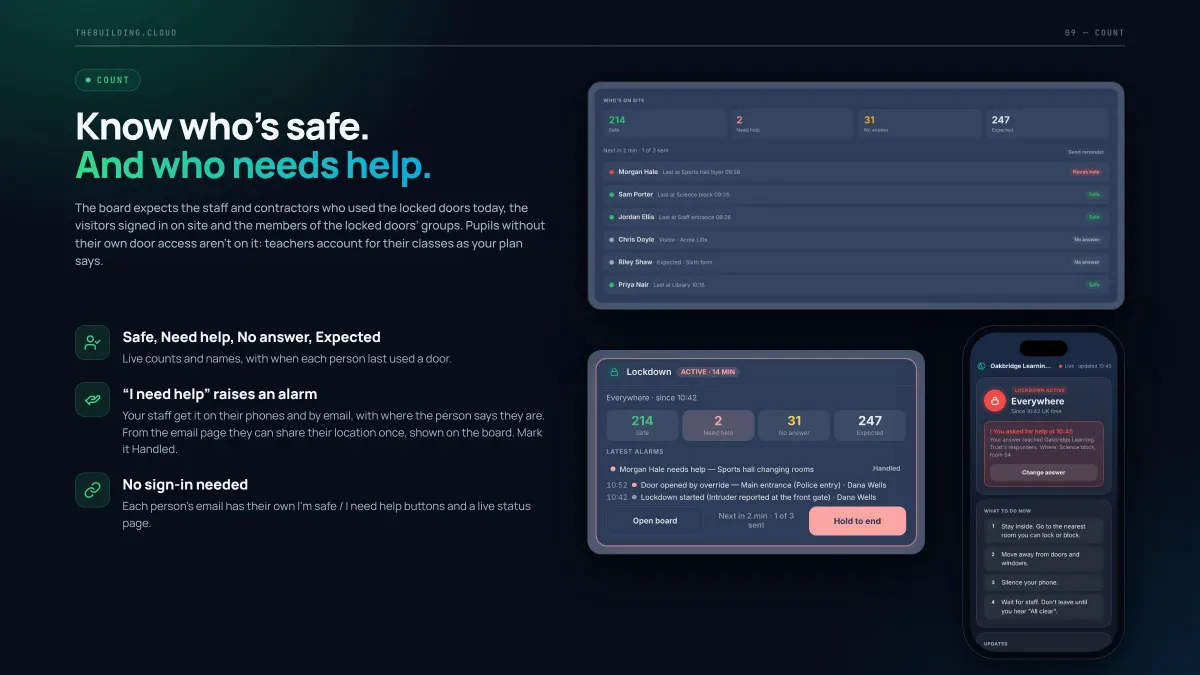
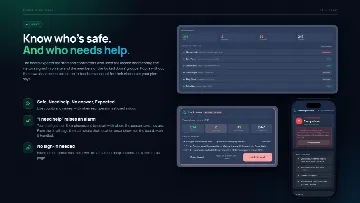
Know who’s safe. And who needs help.
The live board shows expected people and their responses, including staff and contractors who used the locked doors that day and visitors signed in on site. Pupils without their own door access are not on the board; teachers account for their classes according to the school’s plan.
Page 10
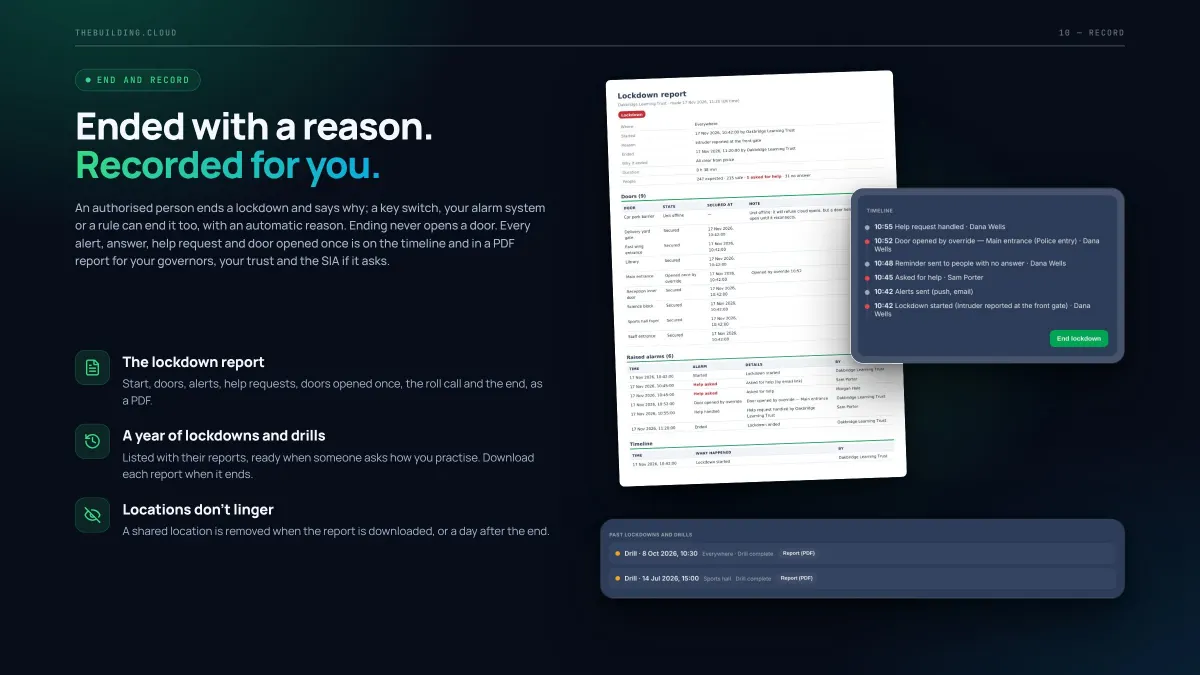
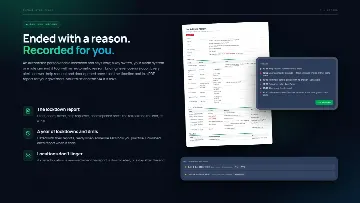
Ended with a reason. Recorded for you.
An authorised person can end a lockdown with a reason; a key switch, alarm system or rule can also end it with an automatic reason. The timeline and PDF report record alerts, answers, help requests, doors opened once and the end.
Page 11
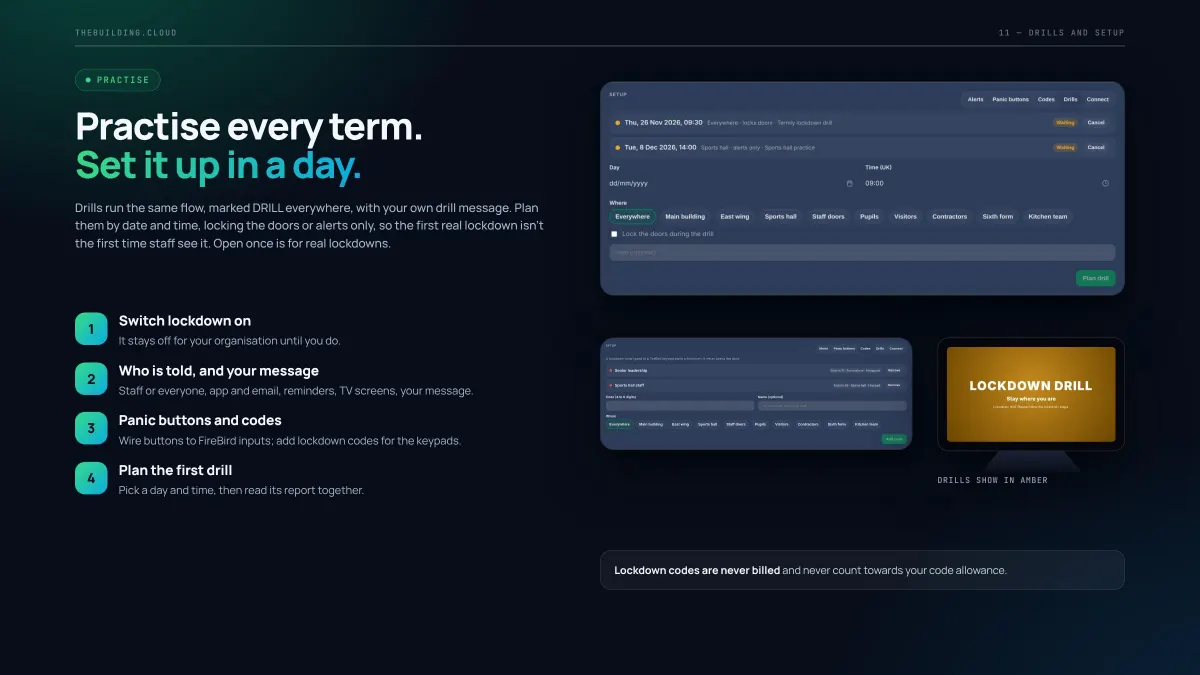
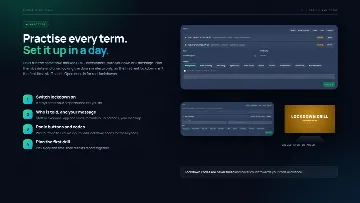
Practise every term. Set it up in a day.
Drills follow the lockdown flow and are marked as drills, with a choice of locking doors or sending alerts only. The setup steps cover switching lockdown on, choosing messages and recipients, adding panic buttons and codes, and planning a first drill.
Page 12
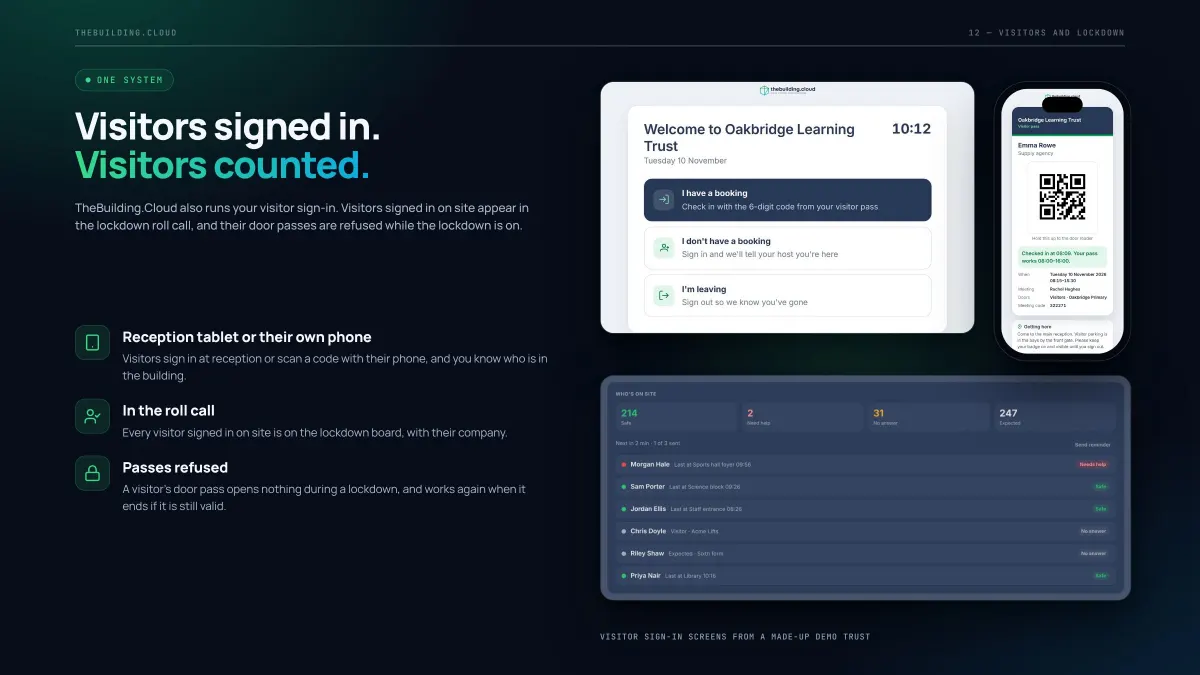
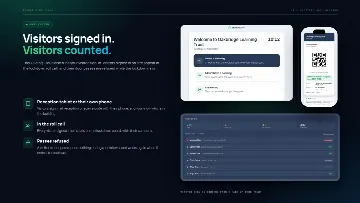
Visitors signed in. Visitors counted.
Visitors can sign in at reception or scan a code with their phone. Those signed in on site appear on the lockdown board, and their door passes are refused during lockdown.
Page 13
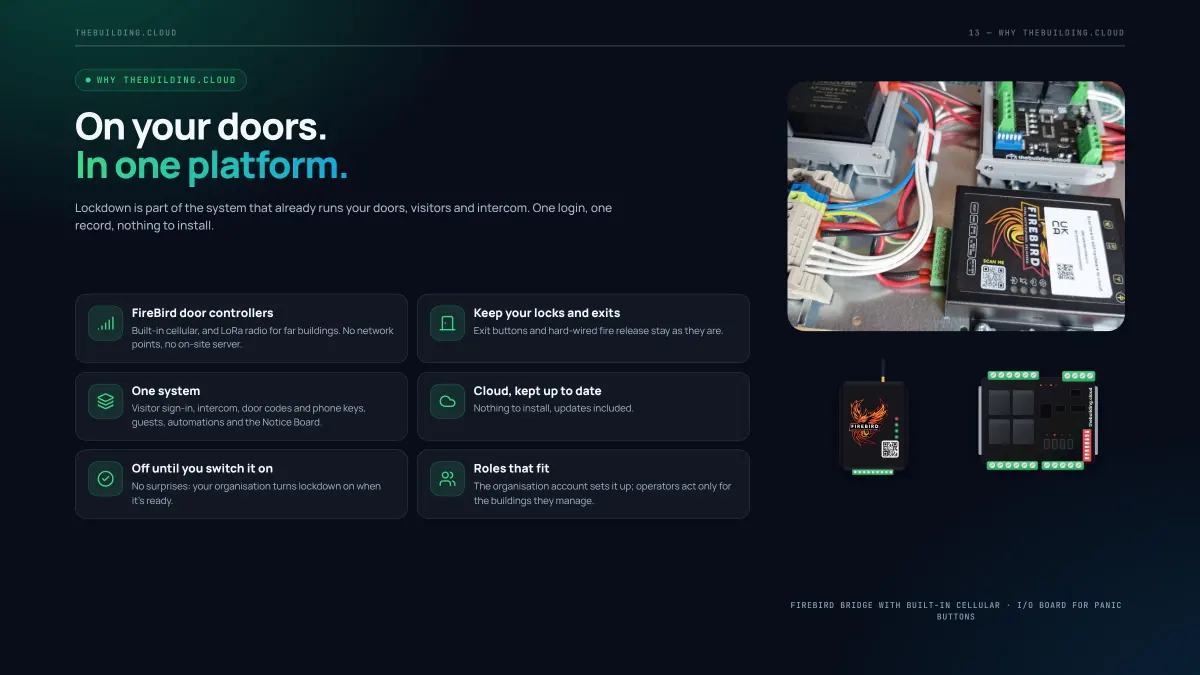
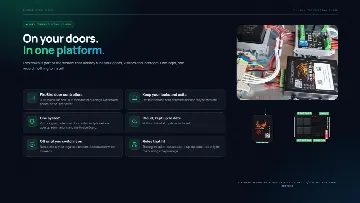
On your doors. In one platform.
Lockdown is part of the platform used for doors, visitors and intercom. The brochure describes FireBird controllers, existing exits, account roles and cloud updates; lockdown stays off until the organisation switches it on.
Page 14
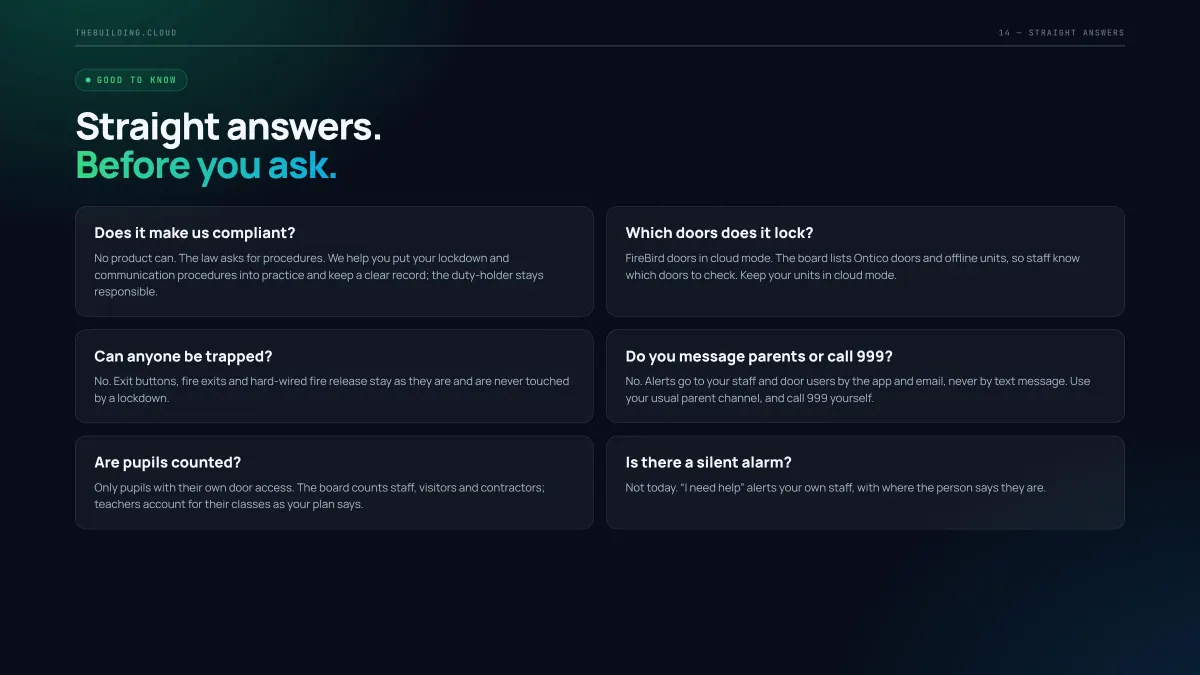
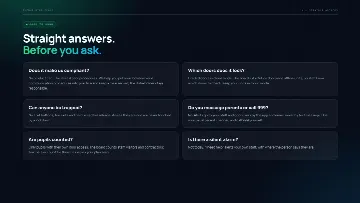
Straight answers. Before you ask.
This page answers questions about door coverage, exits, alerts, pupils and help requests. It says alerts do not go to parents and do not call 999, so schools should use their usual parent channel and call 999 themselves.
Page 15
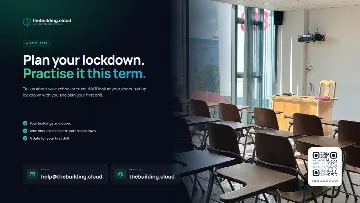
Plan your lockdown. Practise it this term.
The next step is to discuss the school’s buildings and doors, who can start a lockdown and a date for the first drill. The brochure gives help@thebuilding.cloud as the contact email.
Key points
- Lockdown covers FireBird doors in cloud mode.
- Alerts go by app and email, not by text message.
- A door can be opened once for 3 to 60 seconds during lockdown.
- Drills can lock doors or send alerts only.
- Lockdown reports can be downloaded as PDFs.
- Lockdown codes do not count towards the code allowance.
Who it’s for
- Schools and colleges
- Nurseries and childcare settings
- School and academy trusts
- Governing bodies and proprietors
- Site managers and building operators
Questions people ask
Which doors does lockdown cover?
It covers FireBird doors in cloud mode. The board lists Ontico doors and offline units so staff know which doors to check.
How are staff alerted?
Alerts go by app and email, with banners and optional messages on TV screens. They are not sent by text message.
Are pupils included in the roll call?
Only pupils with their own door access are included. Teachers account for their classes according to the school’s plan.
Can the school practise a lockdown?
Yes. Drills can be scheduled for a date and time, either locking the doors or sending alerts only. They are marked as drills.
What happens to fire exits during lockdown?
Fire exits, exit buttons and hard-wired fire release remain as they are and are not changed by a lockdown.