About this brochure
This brochure explains door entry and access control for social housing, managed from a browser. It covers tenant access using phone keys, fobs and PINs, as well as visitor calls, notices and fault reporting. It also describes how teams can manage doors across estates, review entry records and give contractors or carers timed access. Door controllers are covered by a lifetime hardware warranty while the subscription is active, subject to exclusions.
The guide is for housing associations, councils and the teams responsible for their blocks and schemes. It looks at costs, procurement, tenancy changes, sheltered housing and replacing systems that use analogue phone lines. It also explains how the platform supports procedures relating to social housing standards and fire safety duties. Landlords can start with a pilot at one block or scheme.
What’s inside
The text of each page, written out so it can be read and searched.
Page 1
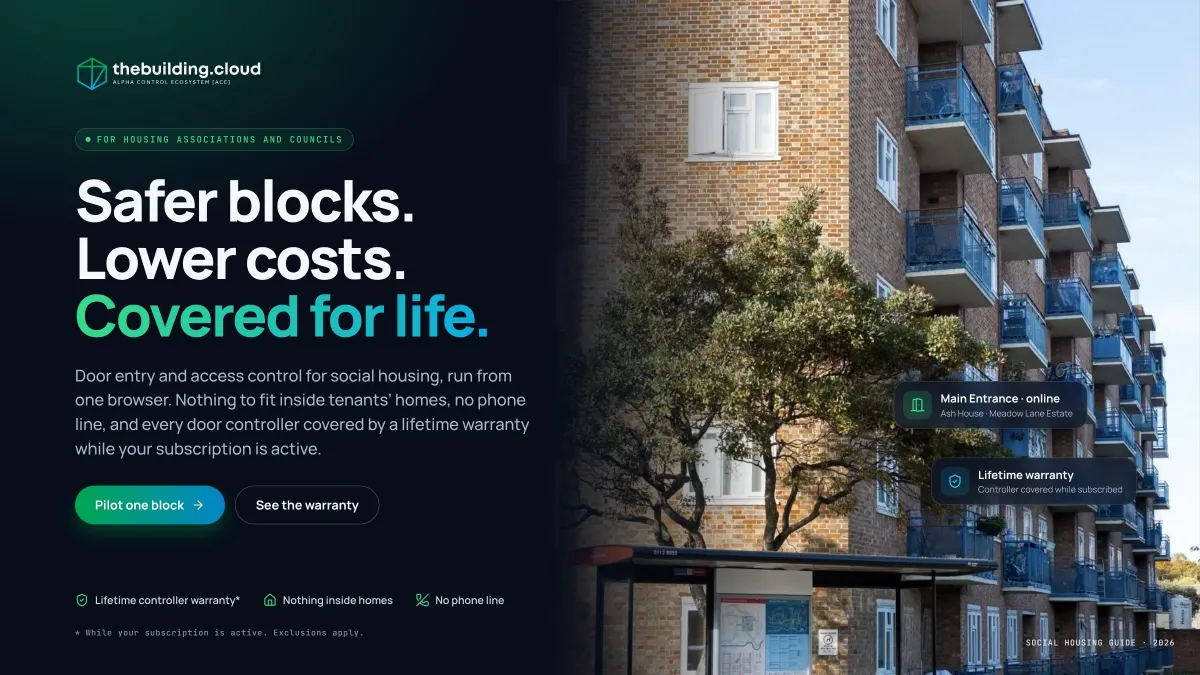
For housing associations and councils
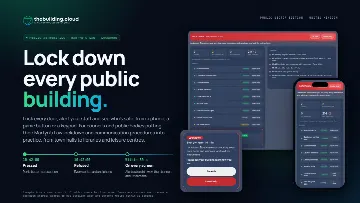
The brochure introduces browser-based door entry for social housing, with nothing to fit inside tenants’ homes and no phone line. Door controllers have a lifetime warranty while the subscription is active; exclusions apply.
Page 2
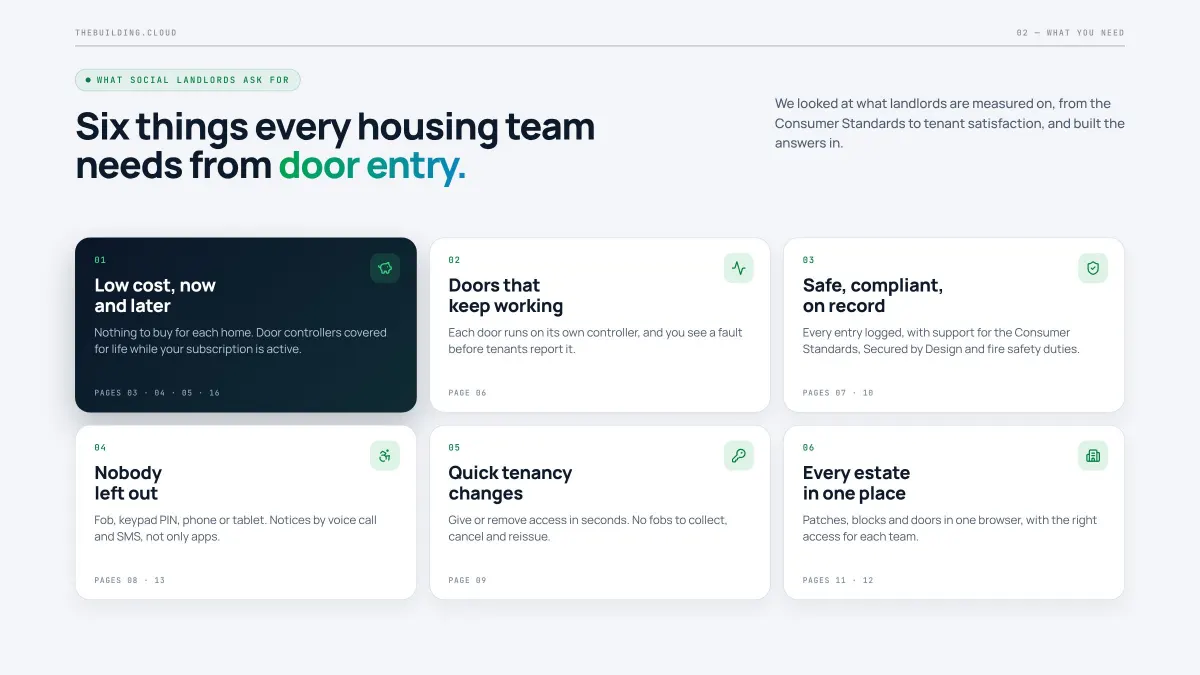
What social landlords ask for
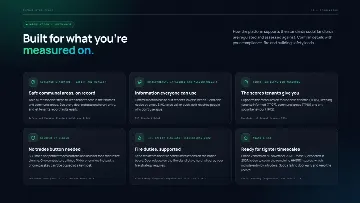
Six priorities include costs, reliable doors, records, access options for tenants, tenancy changes and estate management. The brochure directs readers to the pages covering each topic.
Page 3
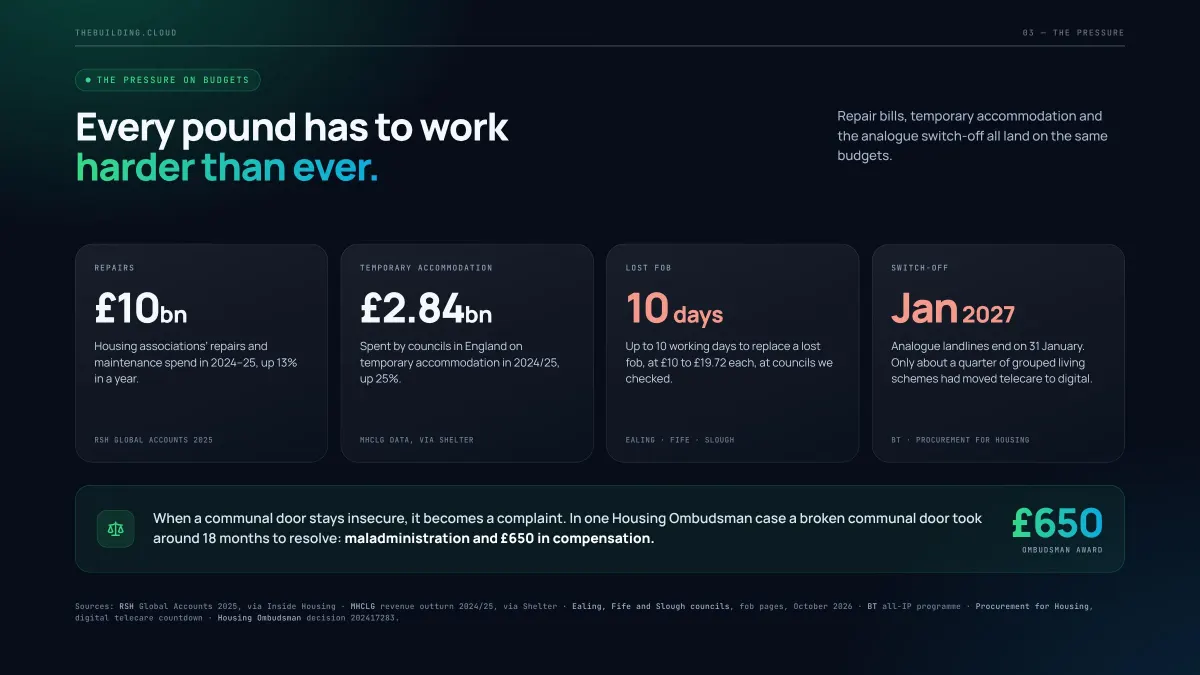
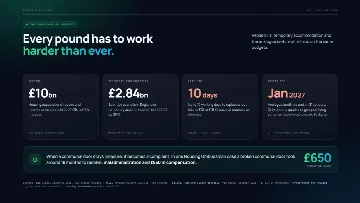
The pressure on budgets
The brochure sets out figures on repairs, temporary accommodation, lost fobs and the analogue switch-off. It also describes a Housing Ombudsman case involving a broken communal door.
Page 4
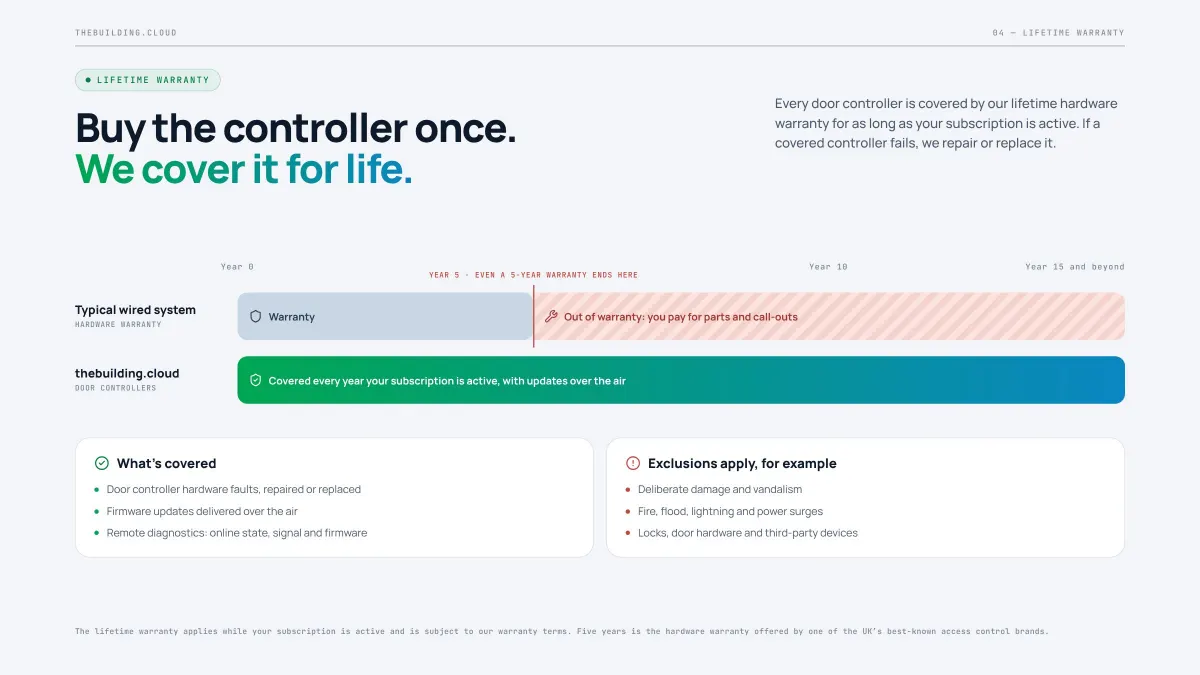
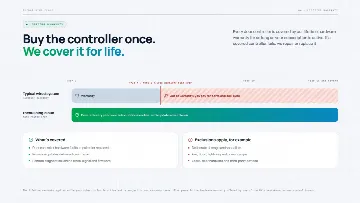
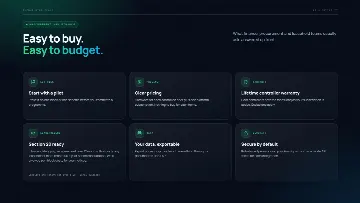
Lifetime warranty
Door controller hardware faults are repaired or the controller replaced while the subscription is active, subject to the warranty terms. Exclusions include deliberate damage, fire, flood, lightning, power surges and third-party devices.
Page 5
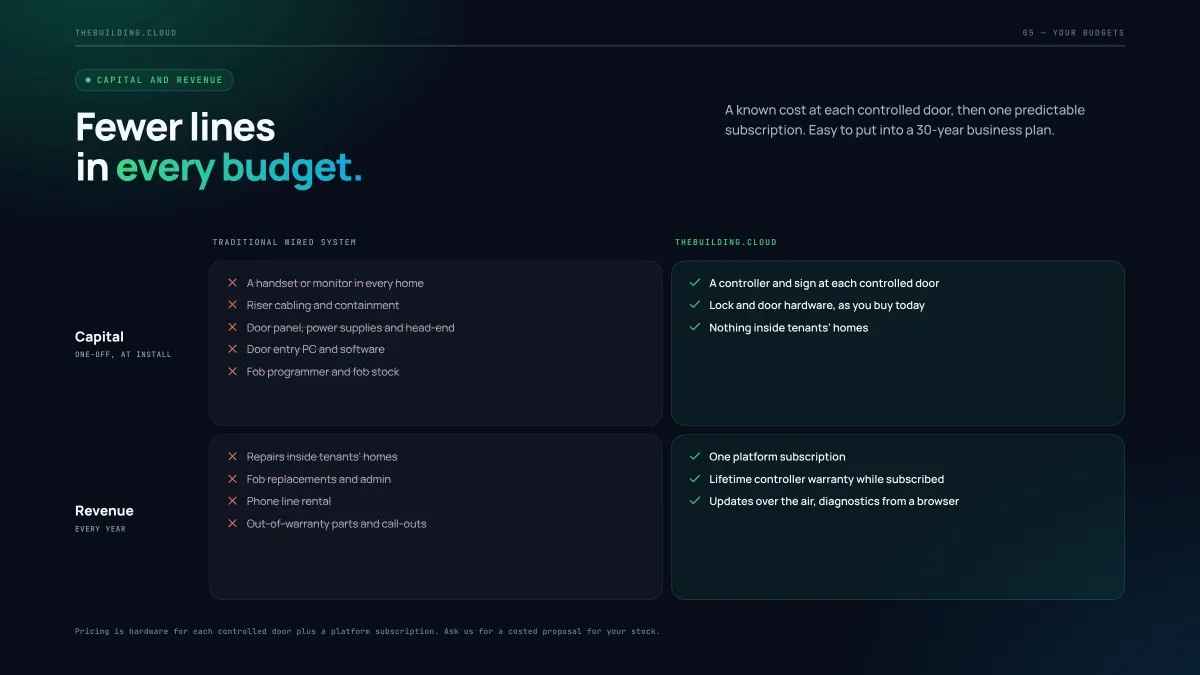
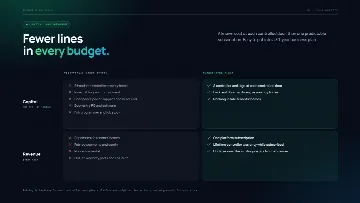
Capital and revenue
The brochure compares the installation and running costs of a traditional wired system with hardware for each controlled door and a platform subscription. It invites landlords to ask for a costed proposal.
Page 6
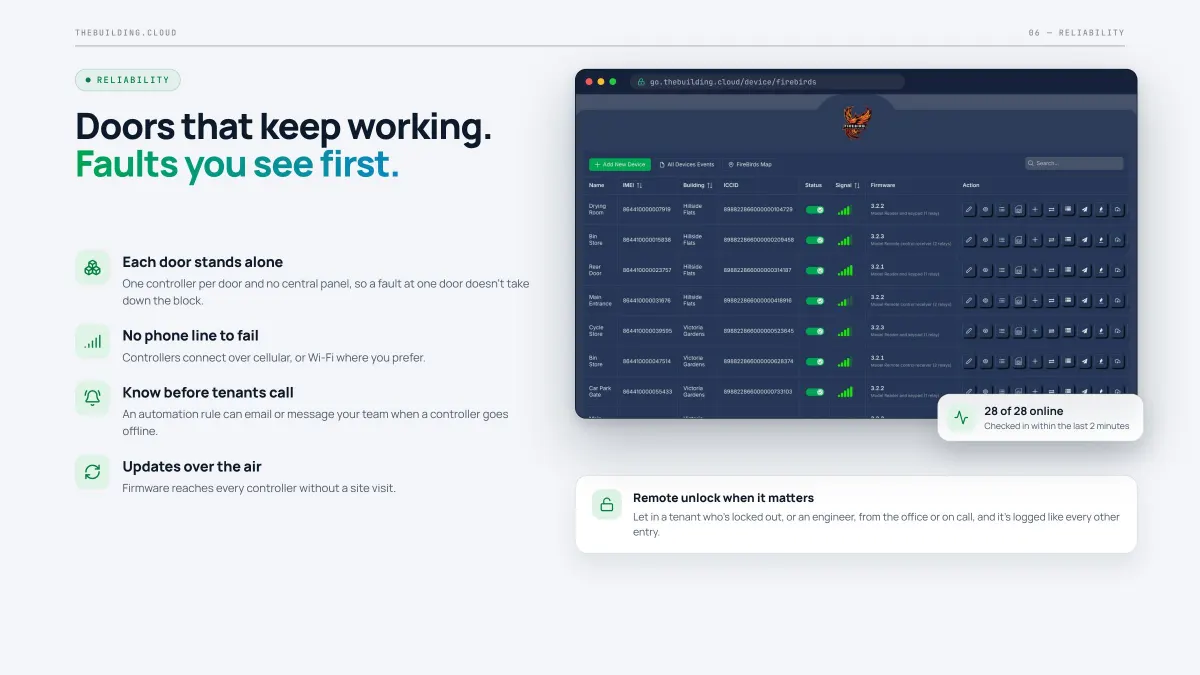
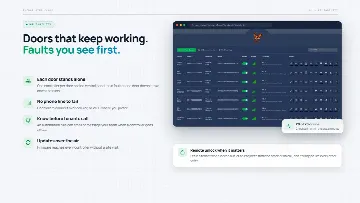
Reliability
Each door has its own controller, connected over cellular or Wi-Fi, and firmware can be updated remotely. Teams can receive an alert when a controller goes offline and unlock a door remotely.
Page 7
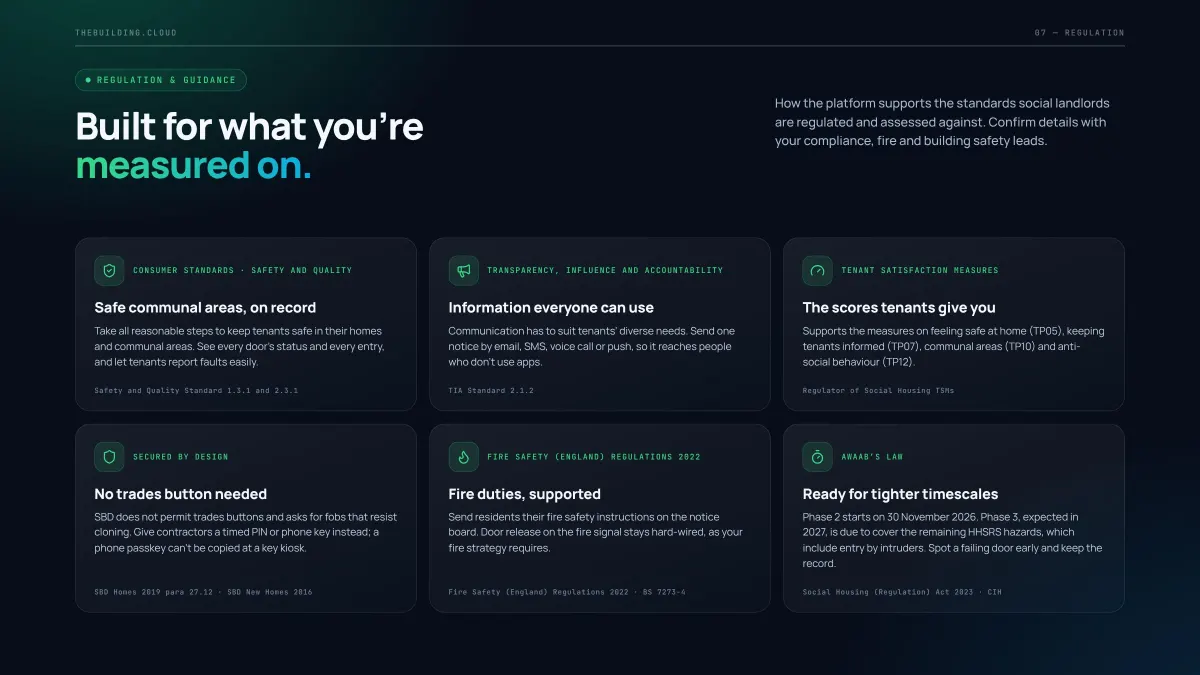
Regulation & guidance
The brochure describes how door status, entry records, notices and fault reports can support social landlords’ procedures. It also discusses Secured by Design, fire safety duties and Awaab’s Law, and advises confirming details with relevant safety and compliance leads.
Page 8
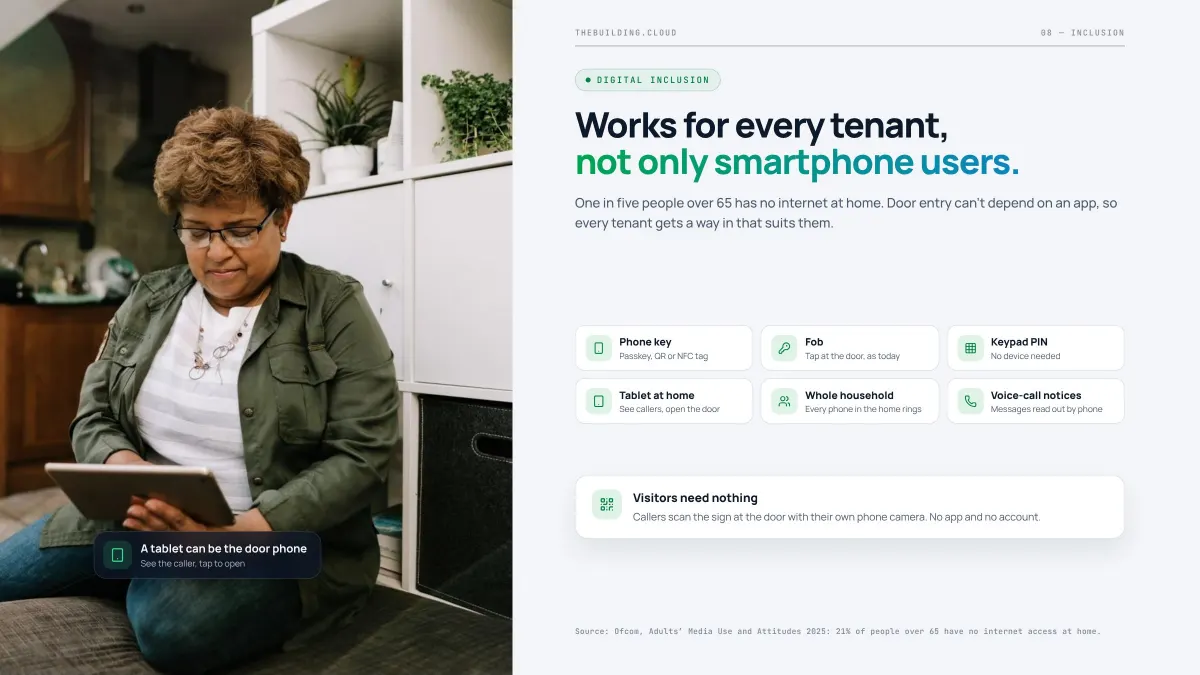
Digital inclusion
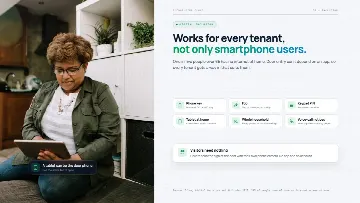
Tenants can use phone keys, fobs or keypad PINs, and a tablet can be used to see callers and open the door. Visitors can scan the sign at the door with their phone camera without an app or account.
Page 9
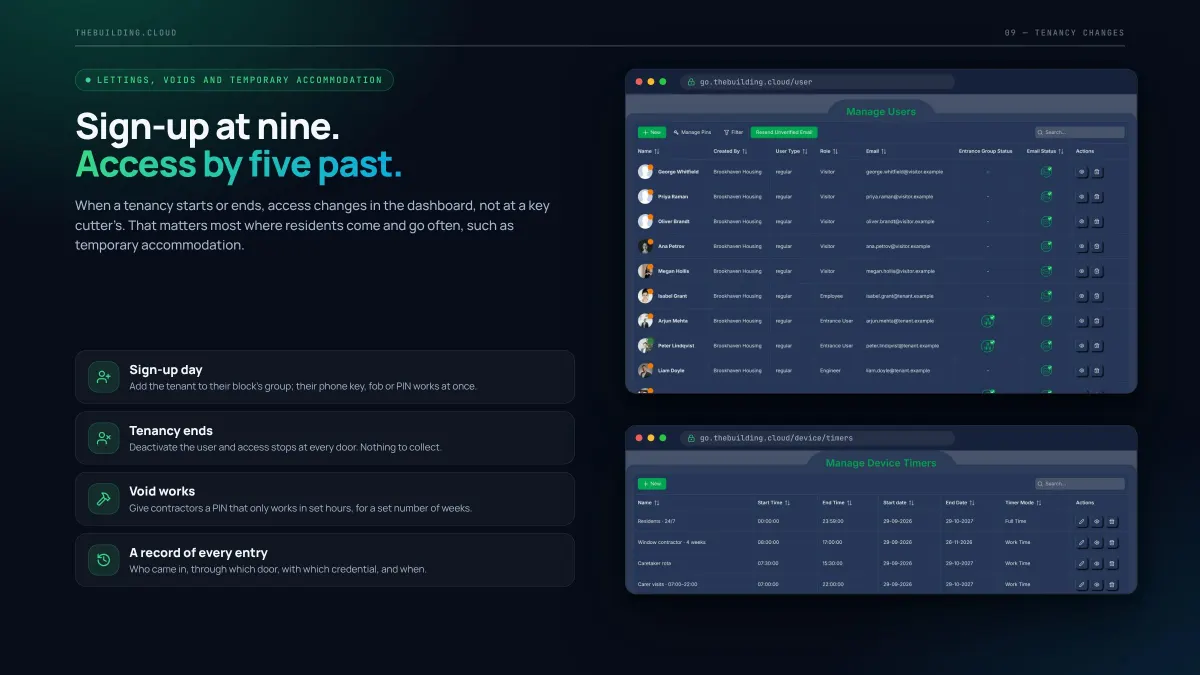
Lettings, voids and temporary accommodation
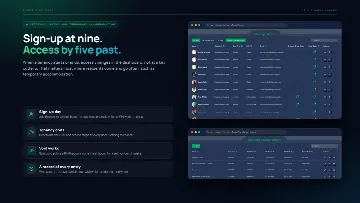
Teams can add or deactivate a tenant’s access in the dashboard and give contractors PINs limited to set hours and weeks. Entry records show the person, door, credential and time.
Page 10
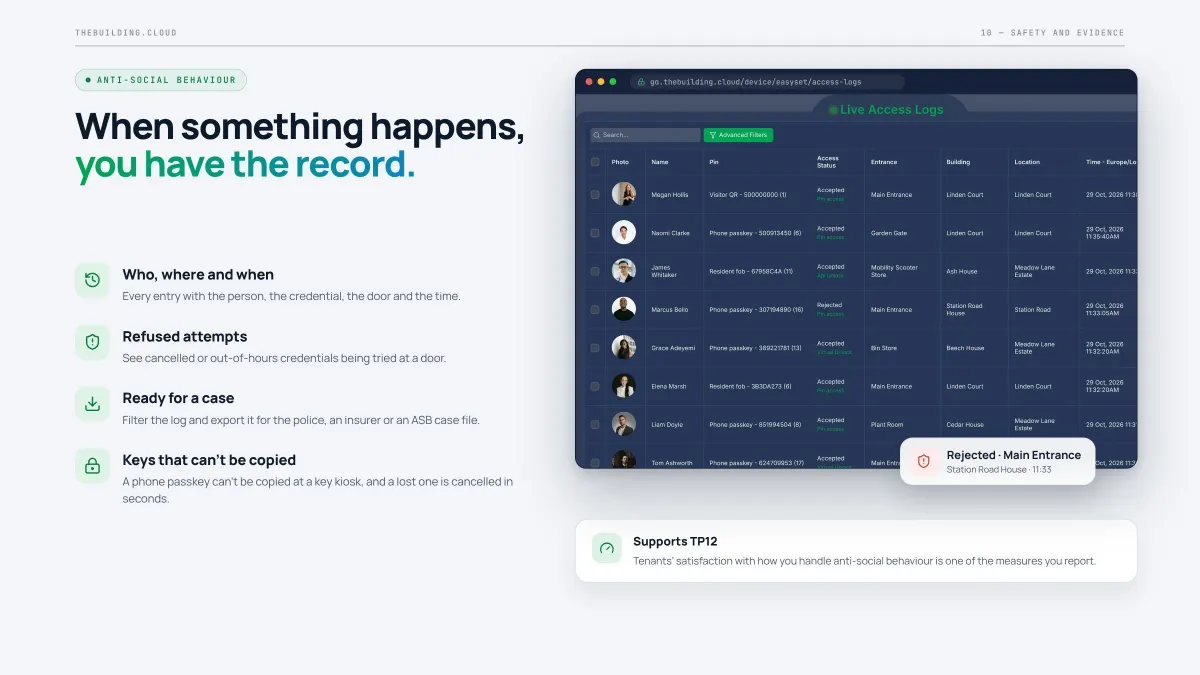
Anti-social behaviour
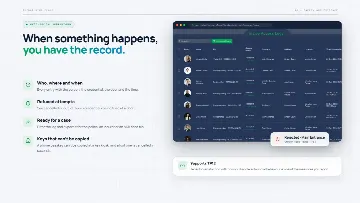
Teams can review entries and refused attempts, then filter and export logs for a case file, the police or an insurer. A lost phone passkey can be cancelled.
Page 11
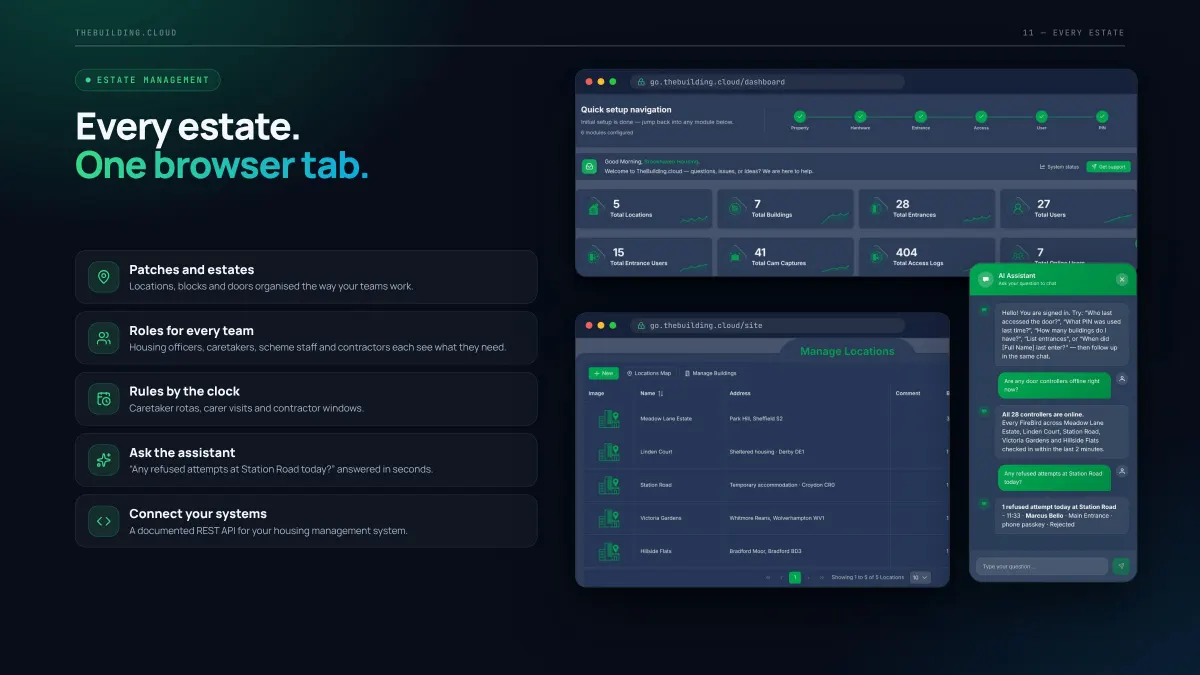
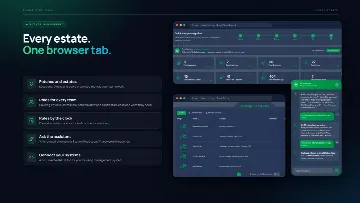
Estate management
Locations, blocks and doors can be organised in one browser, with roles for different teams and timed access rules. The brochure also describes an assistant and a documented REST API for a housing management system.
Page 12
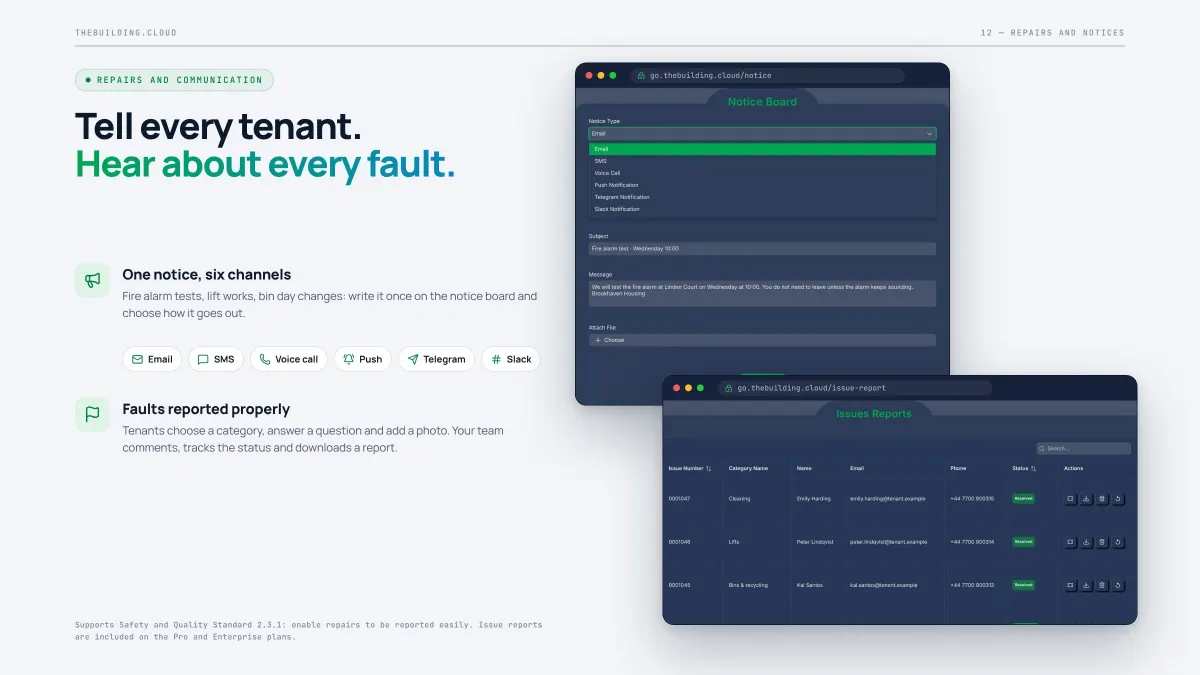
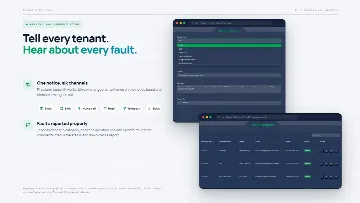
Repairs and communication
Teams can send notices through email, SMS, voice call, push, Telegram or Slack. Tenants can report faults with a category, answers and a photo; issue reports are included on the Pro and Enterprise plans.
Page 13
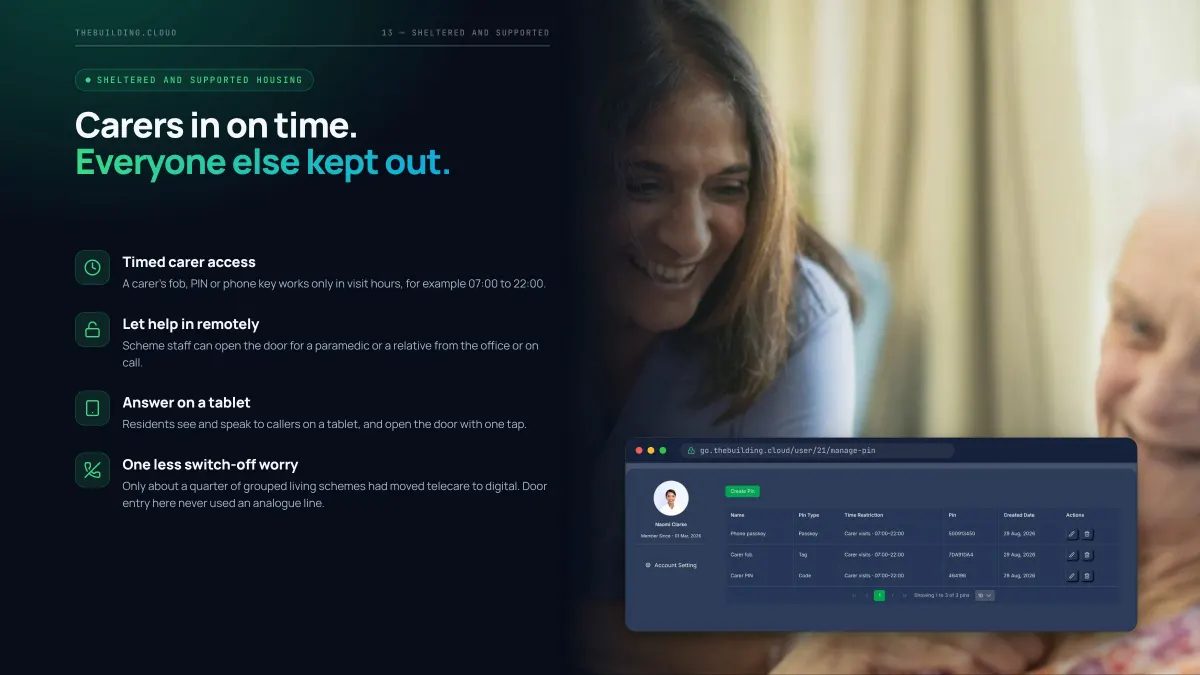
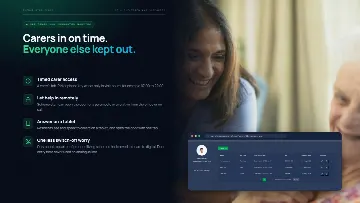
Sheltered and supported housing
Carers can receive access limited to visit hours, while scheme staff can remotely open a door for a paramedic or relative. Residents can see and speak to callers on a tablet and open the door.
Page 14
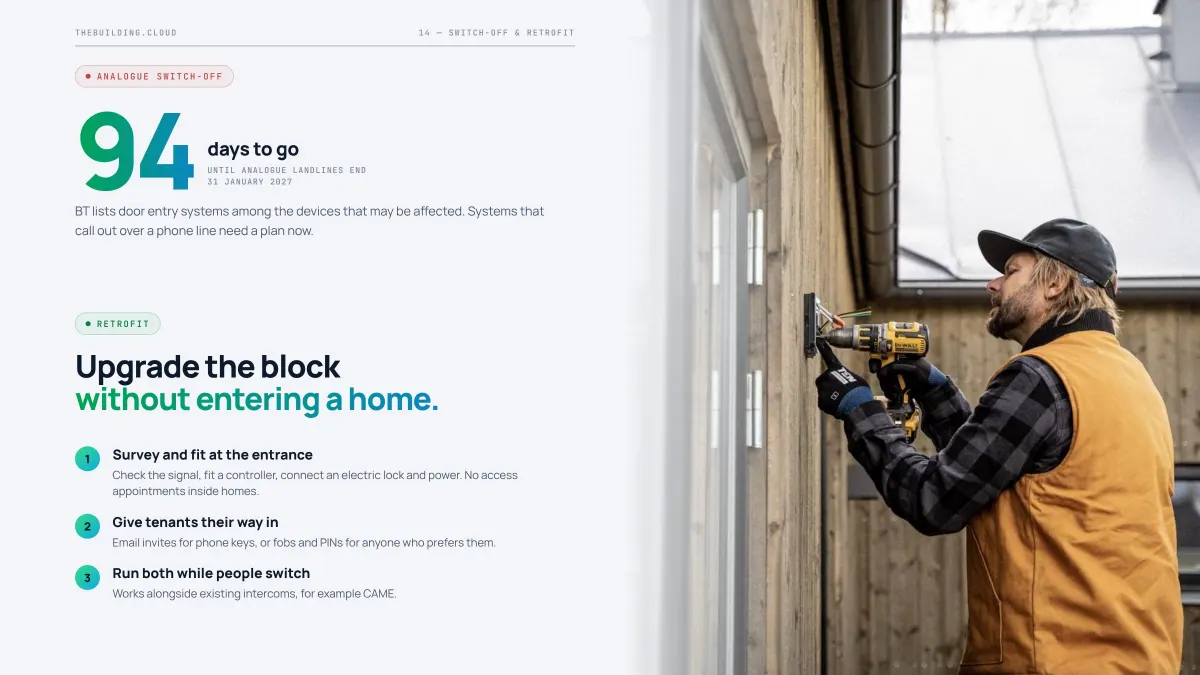
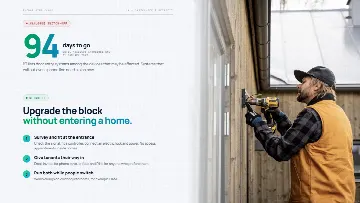
Analogue switch-off
The brochure describes a retrofit survey and installation at the entrance, without appointments inside homes. Tenants can use phone keys, fobs or PINs, and the system can run alongside an existing intercom while they switch.
Page 15
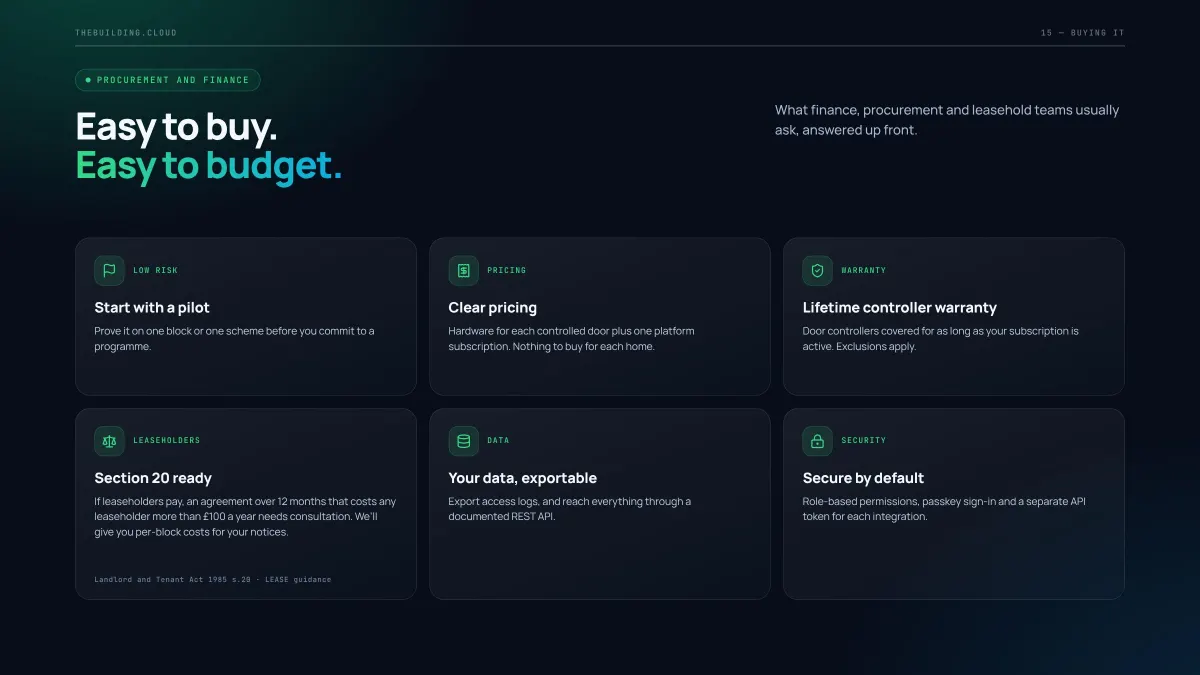
Procurement and finance
Landlords can start with a pilot and request per-block costs for leaseholder notices. The page also covers pricing, the controller warranty, data exports and role-based permissions.
Page 16
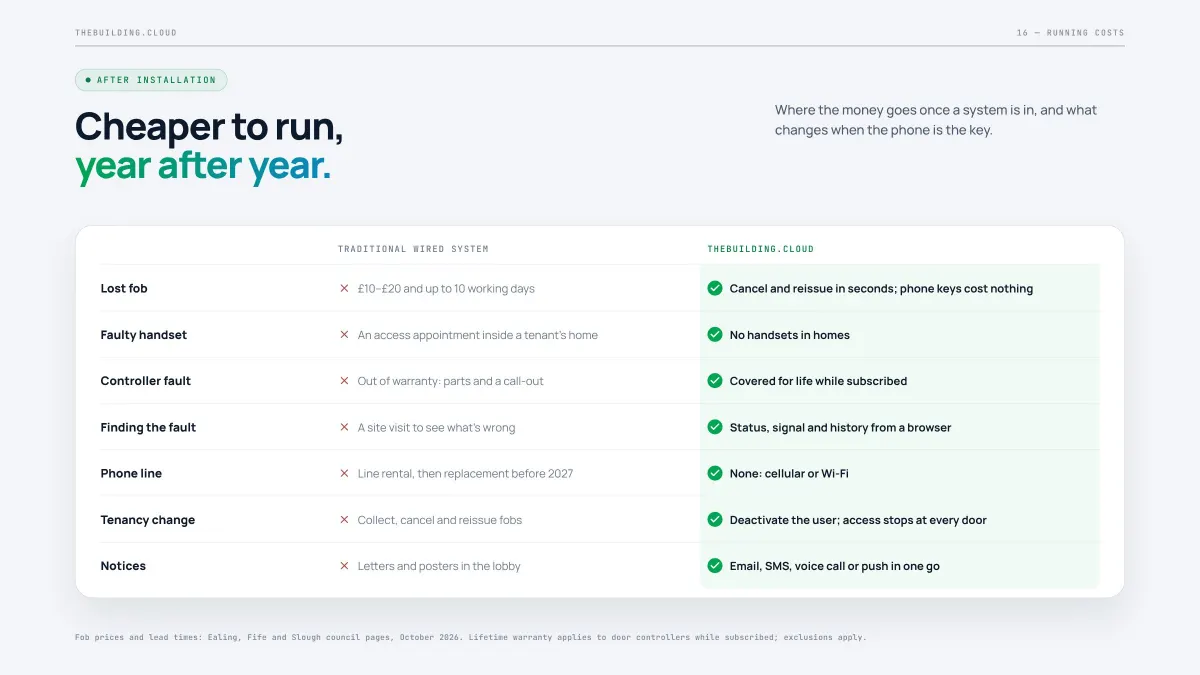
After installation
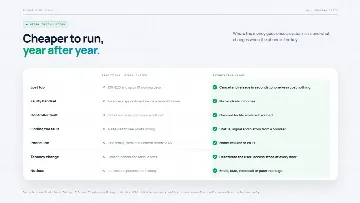
A comparison covers lost fobs, handset faults, controller faults, phone lines, tenancy changes and notices. Controller warranty cover continues while subscribed, subject to exclusions.
Page 17
Questions we hear
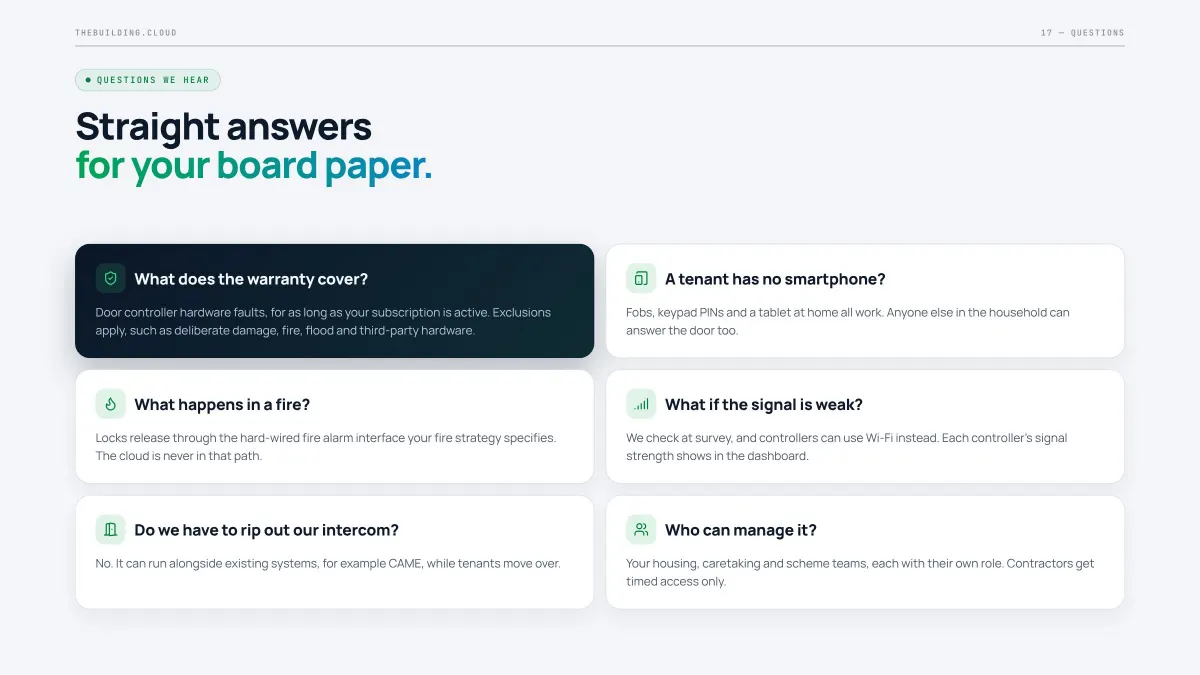
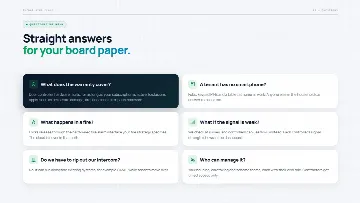
The brochure answers questions about warranty cover, tenants without smartphones, fire release, weak signal, existing intercoms and management roles. It says locks release through the hard-wired fire alarm interface specified by the fire strategy.
Page 18
Next step
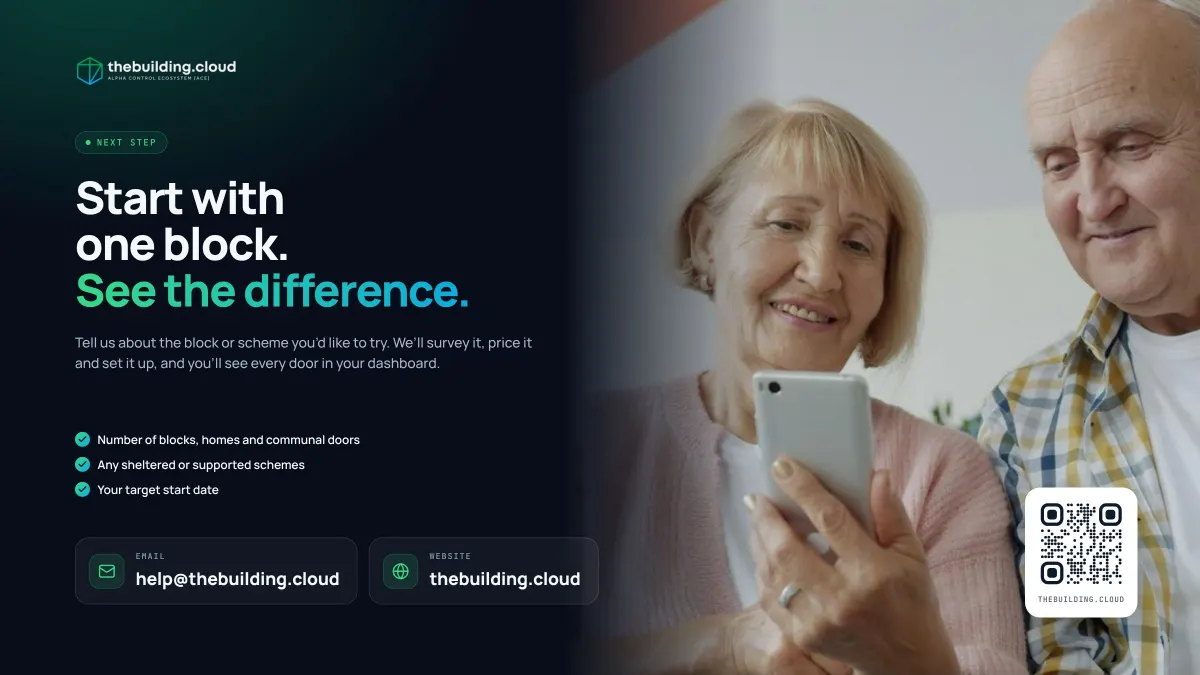
Landlords can enquire about trying one block or scheme. The brochure asks for details of blocks, homes, communal doors, supported schemes and the target start date.
Key points
- Each door has its own controller.
- Controllers connect over cellular or Wi-Fi.
- Nothing needs to be fitted inside tenants’ homes.
- The controller warranty applies while the subscription is active; exclusions apply.
- Issue reports are included on the Pro and Enterprise plans.
Who it’s for
- Housing associations and councils
- Housing officers and estate management teams
- Caretakers and scheme staff
- Procurement, finance and leasehold teams
- Sheltered and supported housing teams
Questions people ask
What does the lifetime warranty cover?
It covers door controller hardware faults while the subscription is active. Exclusions apply, including deliberate damage, fire, flood and third-party hardware.
Can tenants use the door without a smartphone?
Yes. Tenants can use a fob or keypad PIN, and a tablet at home can be used to answer callers and open the door.
Can the system work alongside an existing intercom?
Yes. The brochure says it can run alongside existing systems, such as CAME, while tenants move over.
What happens to door release in a fire?
Locks release through the hard-wired fire alarm interface specified by the fire strategy. The cloud is not in that path.
How is the system priced?
Pricing consists of hardware for each controlled door plus a platform subscription. The brochure invites landlords to ask for a costed proposal.